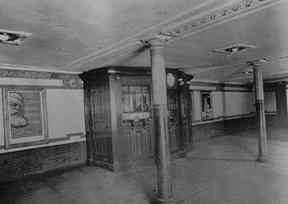
CANAL STREET, now one of the busiest and most complex stations in the subway system, was a typical local station in 1904. Its design is similar to that of Worth and Spring Streets, and like those stations, has different style platform extensions on the uptown and downtown sides, reflecting the time at which those extension projects took place. The ticket booth shown in the photo (tokens were not introduced until 1953, when the fare went beyond the realm of one coin, to 15 cents; tickets were the means of payment in the early years of the subway) is characteristic of that of the first IRT stations. "The ticket booths are of oak with bronze window grilles and fittings" is the description given in the IRT book distributed on opening day. This photo captures many of the other design elements incorporated into the first IRT stations. Note the mouldings and rosettes in the ceiling, patterns which still exist today at many of the stations, open to view by anyone who merely looks up. The wall bases of buff Norman brick are visible here, as are the fittings for light fixtures in the ceiling. |
 |
Worth Street | Spring Street |
 |
[City Hall] [Brooklyn Bridge] [Worth St.] [Canal St.] [Spring St.]
[Bleecker St.] [Astor Place] [14 St.] [18 St.] [23 St.] [28 St.] [33 St.]
[Grand Central] [Times Square]
[50 St.] [59 St.] [66 St.] [72 St.] [79 St.] [86 St.] [91 St.] [96 St.]
[103 St.] [110 St.] [116 St.] [125 St.] [137 St.] [145 St.]