
|
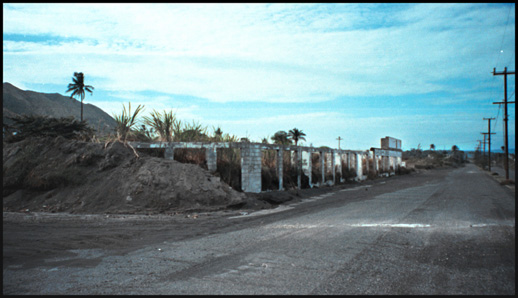
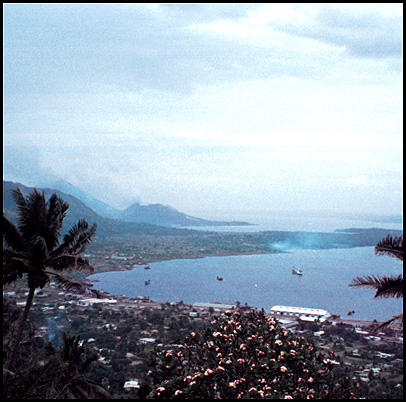
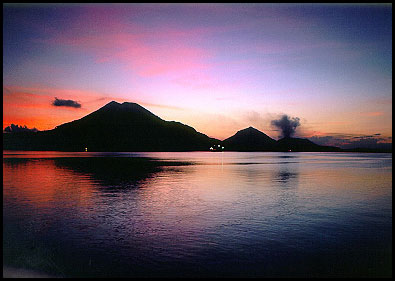
Day 9: Rabaul, PNG Rabaul played a critical role in the Pacific Theater of World War II, and its relics continue to draw Western and Japanese tourists today. (Map and brief history.) The city was also nearly destroyed in 1994 during the eruption of its two volcanoes, Vulcan and Turvuvur. Today Rabaul's streets are barely dug out from the ash. Japanese tunnels and bunkers, mainly built by Chinese prisoners, dot the road along East New Britain's coast. In the center of Rabaul is a bunker that was used by officers who scrawled primitive maps of the area on its concrete walls. Western tourists expecting posted explanations and lights will be disappointed. To see where the Japanese hid out you need a good flashlight and a tolerance of sudden flights of bats. Perhaps the most notable hardship in visiting Rabaul is the 20 mile road in from Kokopo. Built by missionaries, it is so heavily pockmarked with holes that drivers steer into the shoulder for long stretches to avoid the bumps. One mile of road is completely buried under ash. Local men and boys occasionally patch a short stretch of holes with mounds of loose dirt in exchange for 20 toia tips dunned from grateful drivers. That's about 5 cents to be shared among a dozen people. Walkers along the road are a common sight, as are open-bed pickups filled with men and women moving from village to village. On Sundays the road's travelers are tricked out in white or pale blue shirts or dresses, even those walking barefoot.
[ Next page ] |
|