
|
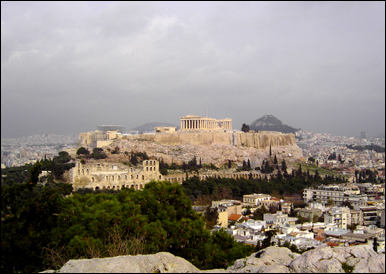
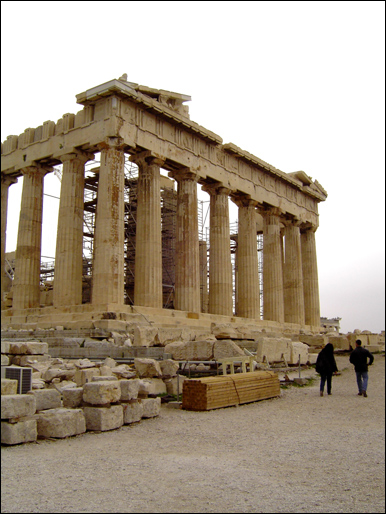
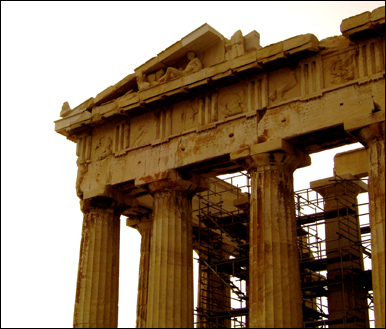
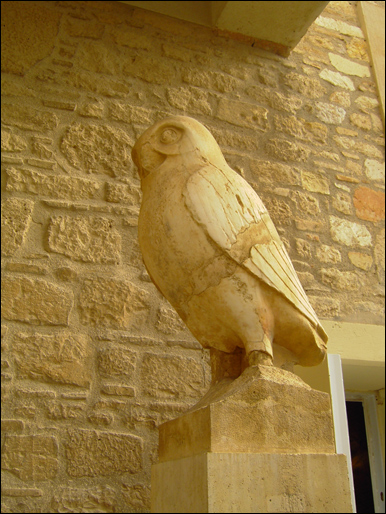
Day 6: Athens Unfortunately, much of the Acropolis was in scaffolding, including all of the Propylea, which was in various stages of reconstruction in preparation for the Olympics. Much or even most of the Acropolis is reconstructed from ruins, including many plaster reproductions of originals that are elsewhere in museums (including, but not limited to, the Elgin marbles). It would be helpful if there were more interpretive signs that would show what state the ruins were in at various time periods, particularly just before preservation and reconstruction began. The Rough Guide mentions that Ottoman buildings were taken down to reveal the original Greek structures, but there is no hint of this at the site. Almost everyone knows the Venetian connection to Athens: the Venetians under Morosini bombarded the Acropolis during the invasion of the 1680's, blowing up a Turkish magazine kept there at the time. It's probably correct to describe this as a crime. But my guide-book makes an interesting point about the current state of the Acropolis: its state of ruin is part of what makes it a symbol of the faded glories of antiquity. Were it still standing completely intact, painted in gaudy reds and blues, filled with a gilded wooden statue of Athena and fronted by painted statues, it would be a very different symbol. [ Next page ] |
|